I run Yellowwood Atelier, a small short-term rental design and brand studio. I'm the designer on every project, the person behind every property brand, and I'm an STR owner myself, which is mostly the reason the studio exists at all. This page is the long version of who I am and how the work got here.
I grew up in a family of artists and architects, which means I've been rearranging rooms and arguing about composition since I was old enough to pick up a piece of furniture. I studied architecture and interior design in college before pivoting into marketing, but design has always been the part of me that's been there, and I think it always will be.
I spent the next fifteen years in marketing, thirteen of them as chief marketing officer of a national healthcare company. I led teams of marketers, designers, and technologists across product, brand, and campaign work, and across that run we picked up a string of design and branding awards I'm proud of. Marketing taught me how to measure whether a design move actually does anything for a business. That part, the operator math behind the design choice, turned out to be the most useful thing I took with me when I started designing short-term rentals.
Today I own and operate four short-term rentals of my own, with a few more coming each year. I'm based in Omaha, married, and raising three kids who travel with me and have gotten weirdly good at install days. I'd rather be honest than impressive, which is probably why the studio is built the way it is.
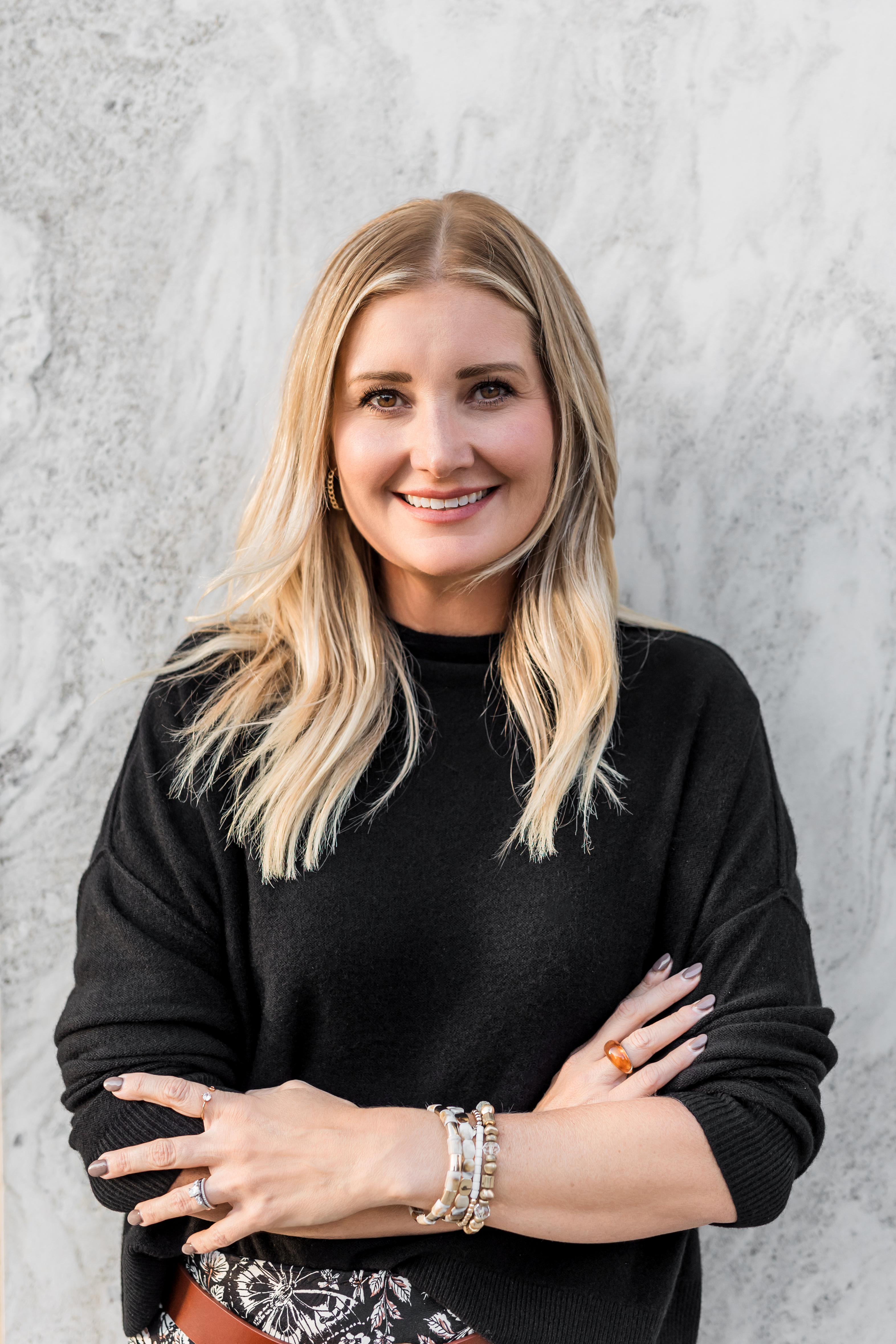
I'm an experienced designer, but for my first short-term rental investment I did what most first-time STR owners do: I hired a well-known firm in the space. I trusted that their reputation, scale, and finished portfolio would translate into a successful property.
It didn't.
Furnishings arrived at the wrong scale and size. Quality was poor. Nearly every other owner in my market had a near-identical copy-paste of the same design. Customer service was underwhelming, and my questions sat in the firm's inbox for days. By the time the property launched, I'd redesigned much of it myself, because it was faster than waiting for the firm to respond.
That's when I knew I could do it better — and that someone had to.
The mission became clear to me: design short-term rentals that don't blend in. Properties guests photograph, post, and remember. A studio that responds the next morning, not next week. Furnishings specified, sourced, and installed by an operator who knows what books, and what doesn't.
The studio's name was waiting. My father spent his career as an architect and artist at a large firm, and when he retired he opened a small boutique studio of his own as a self-described "hobbyist" and called it Yellowwood Atelier, drawing the name from Robert Frost's two roads diverged in a yellow wood. Architecture and art done well always take the less-traveled road, and so does short-term rental investing: the design choices, the operator math, the willingness to commit to what the market won't predict. I carry the studio's name forward into a new chapter. The studio is the same. The chapter is new.
Every choice I make ties to ADR, occupancy, forced appreciation, and review velocity. If a design move doesn't earn its place on the listing or in the review, it doesn't make the cut.
I don't take projects where owners want to skip phases. The math works because every layer compounds. You go all in, or you don't see the returns.
I stay at every property before sign-off. Is the music playing in the right room? Are the cue sticks accessible? Is the coffee station situated where guests reach for it? I know because I test it.
A Western cabin can be distinctly Oklahoma without being Disney-Western. Editorial discipline is what separates a designed STR from a themed one, and I'd rather be designed than themed every time.
I publish the studio's FF&E procurement fee, the pricing rubric, and market context. Most STR design firms hide all three. Owners deserve honest math.
Design alone isn't the brief. The studio extends through hospitality details and operations handoff, because the property has to perform on Saturday night, not on a moodboard.
"Every room needs something unexpected." — my aesthetic in five words.
I travel a lot, mostly with my family. Costa Rica is the trip I cite the most when I'm trying to explain what good hospitality actually feels like. Every place we stayed there felt like a spa, in a way that wasn't precious or expensive, just thoughtful. That's the bar I'm trying to hit.
I read a lot. Made for Living by Amber Lewis is the book I most often hand to a new client or anyone who works with me. If you've flipped through it, you already understand my whole position on layered textures, brave color, and rooms designed to be lived in, not just photographed.
The design references I pull from depend on the project: Hotel Saint George in Marfa, Costa Rican spa elements when there's an outdoor moment to make, rustic-ranched aesthetics for southern cabins. The thread across all of them is the same: layered, deliberate, slightly off-center. Every room needs something unexpected.
Outside of work I garden, walk and listen to audiobooks, and watch my kids play youth sports more than I'd have ever predicted. None of that is fancy. All of it ends up in the design somewhere.
People assume "atelier" is meant to sound fancy. It's not, and I'd rather not be precious about it. An atelier is just a workshop. The place where someone makes things with their hands. That's what I do. The word fits because it's accurate.
Yellowwood Atelier is a workshop. Every project moves through my hands. I keep the season cap small on purpose (four to six properties) so the work stays the way I want it.
An artist workshop is exactly what we do. No French.
Yellowwood Atelier accepts 4–6 properties per season. Application is free, response within 5 business days, and acceptance is based on the fit between your property and the studio's design and performance standards.
Apply to work with Yellowwood Atelier